

Doing it yourself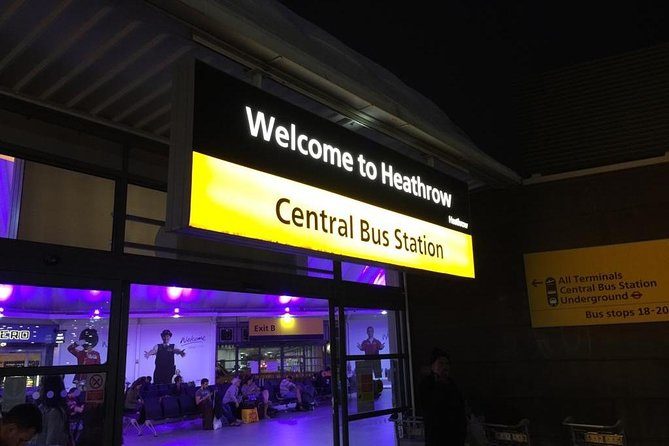
A London Layover Without a Tour: Getting Into London From Heathrow
Four published ways in, what each actually costs, where to leave your bags, and an honest account of when the train beats booking a car. Sometimes it plainly does.
In this guide
- Can you do this yourself?
- What are the four ways in?
- How do you pay for it?
- What do you do with your luggage?
- What should you actually walk?
- What does doing it yourself actually cost?
- When is doing it yourself clearly better?
- When is a tour clearly better?
- Does the border rule change if you take the train?
- What goes wrong when people do it themselves?
- What do you actually need on your phone?
- How do you time the return leg?
- Where should you eat?
- So which should you do?
- Frequently asked questions
Can you do this yourself?
Yes, easily, and for a lot less money. Heathrow publishes four ways into central London and all of them work. If you are travelling alone, carrying a rucksack and have eight hours, the Elizabeth line and a walk round Westminster is a perfectly good afternoon and costs under thirty pounds return.
This guide sets out how, honestly, including the parts that are worse than they look. It is the same information the tour operators would rather you did not have, and publishing it is not a problem: the reader who only needed a train ticket was never going to book a private car.
What are the four ways in?
All four are published by the airport itself, with the times and fares below. Which is right for you depends less on speed than on where in London you actually want to be.
| Way in | Journey | Fare | Terminals | The catch |
|---|---|---|---|---|
| Heathrow Express | 15 minutes to Paddington | from £10 | All terminals | Fastest. Paddington is not central for sightseeing. |
| Elizabeth line | under 45 minutes | £13.90 | All terminals | Reaches Bond Street and Tottenham Court Road directly. |
| Piccadilly line | under an hour | from £5.50 | T2/3, T4, T5 | Cheapest. Slow, and busy at both ends of the day. |
| Coach | To Victoria Coach Station | from £10 | T4, T5, Central Bus Station | Slowest. Useful only from the outer terminals. |
| Taxi or private hire | an hour minimum | Not published | All terminals | Door to door with your bags, and the only option that waits. |
Journey times and fares as published by Heathrow and Heathrow Express. Transfers between the three airport stations are free.
The one people get wrong is Heathrow Express. It is genuinely the fastest, but Paddington is a mile and a half from anything you came to see, so the fifteen minutes is followed by another twenty on the Underground. The Elizabeth line is slower to Zone 1 and closer to where you are going.
How do you pay for it?
Contactless. Tap a card or a phone at the gate on the way in and again on the way out, and the fare is worked out for you. There is no need to buy anything in advance for the Underground or the Elizabeth line, and no need for an Oyster card if you have a contactless bank card.
Heathrow Express is the exception: book it ahead online and it starts at £10; buy it on the platform and it costs a good deal more. That is the single biggest saving available to a self-guided layover.
What do you do with your luggage?
This is the real obstacle, and it is the reason many people book a car. Dragging cabin bags round Westminster for four hours is hard work, and the Underground at rush hour with a suitcase is harder.
The answer is the left luggage desk in your arrivals hall, from £10 and monitored around the clock (Heathrow). You have to come back to the same terminal to collect, which fixes your return route — worth knowing if you were planning to leave from a different one. More on that on the timing rules page.
What should you actually walk?
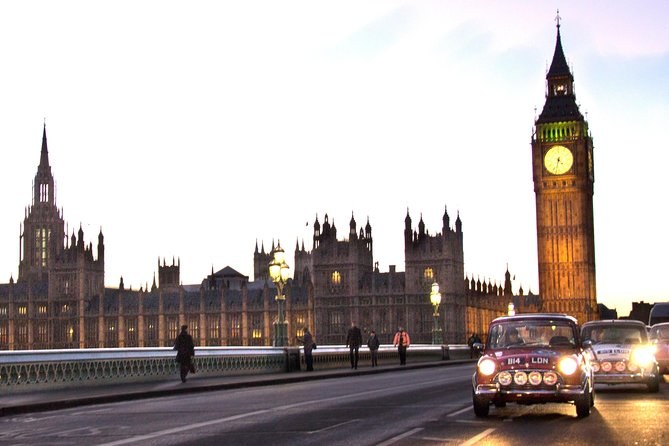
Get off at Bond Street or Tottenham Court Road on the Elizabeth line, or Green Park on the Piccadilly line, and walk south. Buckingham Palace, St James's Park, Horse Guards, Downing Street, Westminster Abbey, Parliament and the London Eye are a single loop of about ninety minutes at a walking pace.
If you have longer, carry on along the Embankment to St Paul’s and the Tower, or take the Circle line two stops. The clusters and the distances between them are on the layover map.
What does doing it yourself actually cost?
Return travel on the Elizabeth line is about £28. Left luggage is £10 upwards. Lunch is whatever you want it to be. Call it £50 for one person, or £100 for a couple with a bag stored.
Against that, the cheapest per-person tour is $414 and the cheapest whole-car fare is $441. The gap is large and it is real. What it buys is set out in the next two sections.
When is doing it yourself clearly better?
Eight hours or more. With that much slack the return leg stops being stressful and the saving is worth having.
Travelling alone or as a couple, with cabin bags only. No luggage problem, no capacity argument, and the per-person tour fares are at their least competitive.
You have been to London before. You do not need the orientation a guide provides, and you already know which two stops you want.
You enjoy the logistics. Some people genuinely do, and there is nothing wrong with it.
When is a tour clearly better?
Five or six hours. The margin for error is small enough that having somebody else own the return is worth paying for.
Three or more of you. A whole-vehicle fare divided three or four ways gets close to the cost of train tickets, and you skip the luggage problem entirely.
Children, or anyone with a mobility consideration. The Underground is step-heavy and crowded; a car is a car.
You want to be told what you are looking at. A self-guided walk past Horse Guards is a walk past a building. The comparison by format is in choosing a London layover tour.
Does the border rule change if you take the train?
Not at all. Leaving the terminal means crossing the UK border whether a driver collects you or you walk to a platform. The electronic travel authorisation rules apply the same way, and GOV.UK's exemption covers only passengers who never pass through border control (GOV.UK).
This catches people out because it feels like a smaller undertaking. It is not, in the eyes of the border. The full rule is on the timing rules page.
What goes wrong when people do it themselves?
Three things, in order of frequency. They underestimate the return: the Piccadilly line at five o'clock takes longer than it did at eleven. They carry their bags all day instead of storing them. And they aim at something ticketed — a cathedral interior, an observation wheel — and lose an hour to a queue.
All three are avoidable. Store the bags, leave earlier than you think, and treat the day as exteriors. Do that and the self-guided version is genuinely good.
What do you actually need on your phone?
Very little. A contactless card in the wallet app covers every fare, and the Underground map is on the wall at every station. What is genuinely useful is your airline's app, for the gate and any change of departure time while you are out.
Download anything you need before you leave the terminal. Roaming works for most visitors but not all, and the one moment you do not want to be offline is the moment you are working out which platform gets you back.
How do you time the return leg?
Work backwards, and be pessimistic. Heathrow asks you to be at the terminal three hours before an international departure. Add the journey: the Elizabeth line is under 45 minutes to Zone 1 in the middle of the day and slower in the evening peak, and the walk to and from the platforms at both ends is another fifteen minutes that nobody counts.
So on a self-guided afternoon, leave central London four hours before your flight. That feels absurdly early and it is the number that keeps the day enjoyable rather than anxious. The full arithmetic is on the timing rules page.
Where should you eat?
Anywhere. That is not evasion — the tourist core is dense with places to eat at every price, and the only real advice is to sit down somewhere rather than walking with a sandwich, because sitting down is what makes four hours feel like a day out.
Carry a contactless card. Almost nowhere in London takes cash any more, including the buses, and you will not need to change money for a few hours.
So which should you do?
If you have eight hours, are travelling light and have been to London before: take the train, store your bags, and keep the money. That is the honest answer and it is not a close call.
If you have six, or there are three of you, or you are carrying anything, or you want the commentary: book a car. The whole of what the fare buys is the removal of the four problems above, and on a tight connection that is worth the money. The cars, the cabs and the layover walking tours in London are all compared on London Layover Tours, with the fares that decide it.
Frequently asked questions
What is the cheapest way from Heathrow to central London?
The Piccadilly line, from £5.50, in under an hour. It is slow and busy but it goes directly to Green Park and Piccadilly Circus, which is where you want to be.
Do I need an Oyster card?
No. A contactless bank card or a phone works on the Underground, the Elizabeth line and the buses, and the fare is calculated for you. Buying an Oyster card is an extra step with no benefit.
Is Heathrow Express worth the extra?
Only if Paddington is where you want to be. It is the fastest train but it lands you a mile and a half from Westminster, so the time saved goes back into the Underground.
Can I leave my bags somewhere?
Yes, in the arrivals area of every terminal, from £10 and monitored around the clock. You have to return to the same terminal to collect them.
Do the trains run early and late?
The Elizabeth line and the Piccadilly line both run from early morning until late, and the Piccadilly line runs all night on Friday and Saturday. Check the day's first and last services if your connection is at an unusual hour.
Is it safe to walk around central London alone?
The tourist core is busy and well lit at all hours, and the walk between Westminster and Trafalgar Square is one of the most policed stretches of pavement in the country. Ordinary city sense applies.
Tours that fit what this guide covers
Chosen for the argument above rather than for what sells.