Private 3-Hour London Tour with Pickup – Explore Iconic Landmarks
From $441 per group (up to 4)
Check Availability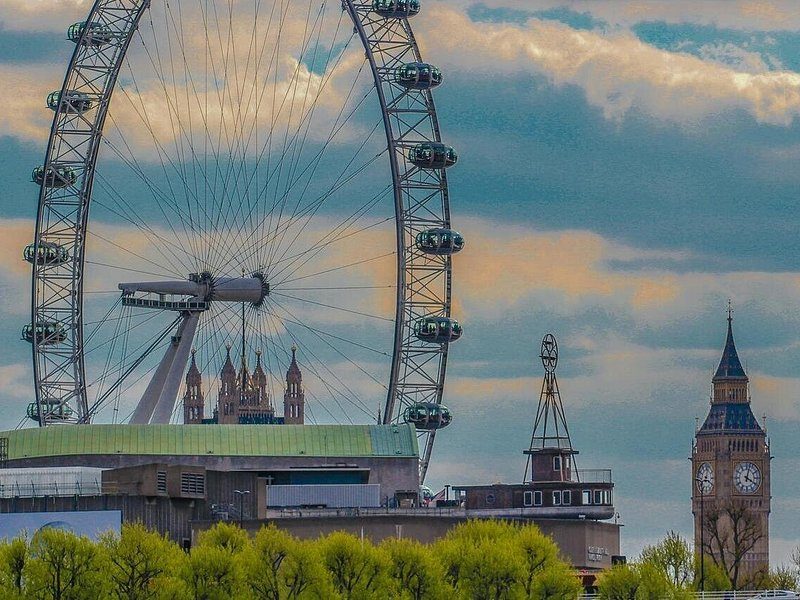
Four hours, six hours and eight, worked through from the moment the wheels touch down. Built from the stop times the operators publish rather than from an optimistic guess, and with the return leg counted.
Every itinerary on the market quotes a duration, and the duration is not the sightseeing. It starts when you meet your driver and ends when you are dropped back, which means the road is inside it. On a six-hour product, a little over two of those hours are travel.
The plans below start from the moment the wheels touch down, because that is what you actually control. Subtract the border, subtract the road, subtract the check-in window, and what remains is the part worth planning. The general version of that arithmetic is on the timing rules page.
Very little, and it is better to know that before you book. By the time you are through the border and into a vehicle, an hour has gone. Forty minutes each way on the road takes another eighty. That leaves you standing in front of Buckingham Palace for twenty minutes and then turning round.
| Clock | Where you are | Notes |
|---|---|---|
| 0:00 | Land | Taxiing, the walk and UK border control |
| 1:00 | Meet your driver | Arrivals hall, name board |
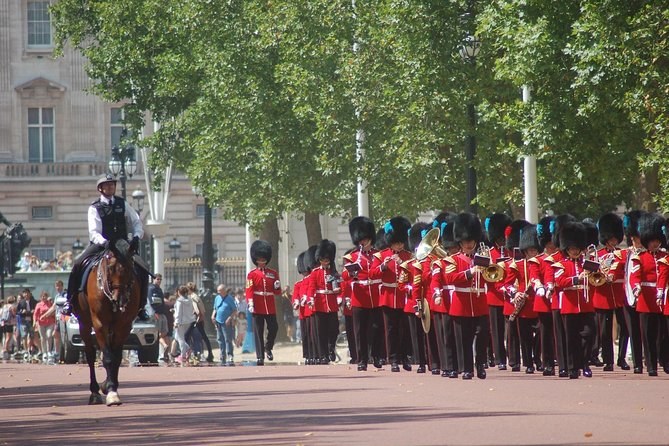
| 1:45 | Buckingham Palace | 20 minutes |
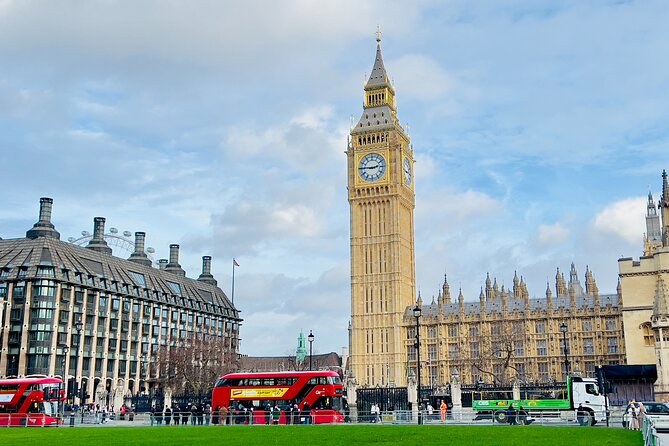
| 2:15 | Westminster Abbey and Big Ben | 20 minutes each |
| 3:00 | Start back | Road time to the terminal |
| 4:00 | At the terminal | Still short of the check-in window |
A four-hour connection, hour by hour. The last row is the problem: you reach the terminal without the check-in window in hand.
If your connection is four hours, the honest recommendation is the lounge. The case is made properly on the short-layover page.
Six hours is the first connection worth leaving for, and the shape of the day is fixed by geography. You get the Westminster cluster and one river crossing, and trying for more is how people end up in traffic instead of in front of buildings.
| Clock | Where you are | Notes |
|---|---|---|
| 0:00 | Land | Border control, then the arrivals hall |
| 1:00 | Meet your driver | The clock on the tour starts here |
| 1:45 | Buckingham Palace | 20–30 minutes |
| 2:20 | Westminster Abbey, Big Ben, Parliament | 20 minutes each |
| 3:20 | Trafalgar Square and Whitehall | 15 minutes |
| 3:50 | St Paul’s Cathedral | 20–30 minutes |
| 4:30 | Start back | Road time, worse in the evening peak |
| 5:30 | At the terminal | three hours before an international departure |
A six-hour connection. Three to three and a half hours in the city, which is enough for the cluster and one crossing.
Skip St Paul’s if your landing is late and put the time into Westminster instead. One cluster done properly beats two done at a jog.
At eight hours the day stops being an optimisation problem. You can do Westminster, cross the river, do the City, sit down and eat, and still be back inside the window. This is where the twenty-five-stop cab routes earn their fare.
| Clock | Where you are | Notes |
|---|---|---|
| 0:00 | Land | Border control |
| 1:00 | Meet your driver | Arrivals hall |
| 1:45 | Kensington and Hyde Park | Only the long cab route reaches these |
| 2:30 | Buckingham Palace and Horse Guards | 30 minutes |
| 3:15 | Westminster and the South Bank | 45 minutes |
| 4:15 | Lunch | The stop that separates six hours from eight |
| 5:15 | St Paul’s and the City | 45 minutes |
| 6:00 | Tower of London and Tower Bridge | 40 minutes |
| 6:45 | Start back | Across the river and west |
| 8:00 | At the terminal | Comfortably inside the window |
An eight-hour connection. The lunch row is the difference: it is the only plan here with an hour that is not accounted for.
Cut the second cluster, not the stops inside the first. If the border took ninety minutes instead of sixty, drop the City and give the extra half-hour to Westminster. Cutting five minutes off each of eight stops produces a day where nothing was seen properly.
The other thing to cut is the pass-by. Several itineraries mark stops as drive-past rather than get-out, and those are free to lose. Ask your driver at the start which are which.
As soon as you are through the border, and not a moment later. Every hour you hold back is an hour off the middle of the day, and the return time is fixed by your departure rather than by choice.
The exception is the guard change. It begins at 10:45 and runs about 45 minutes, on Monday, Wednesday and Friday (Household Division). If your landing time puts it within reach, say so when you book and let the operator build the route round it.
On a six-hour connection, it does not — or it is fifteen minutes and a sandwich. On eight, it is the best hour of the day. Drivers routinely suggest somewhere if you ask at the start rather than at one o'clock, and fish and chips and pub stops come up constantly.
No fare here includes food. Carry a contactless card; almost nowhere in London takes cash any more.
Better than people expect, and in winter it is the only plan available. Piccadilly Circus, the London Eye and Parliament are all more striking lit than they are at four o'clock in November, and the traffic is lighter.
The month-by-month sunset times are on the weather page. Take yours, subtract an hour for the drive back, and you have the moment your daylight plan becomes a night plan.
Completely. You are in a hotel rather than a terminal, so the pickup point changes and the airport runs largely disappear. You also get the morning, which is the best time to be in central London and the only realistic way to catch the guard change on a stopover.
Several listings collect from Heathrow hotels or from a central London address for exactly this reason. Which ones is set out on the long-layover page.
Ranked by what you get for the time: Tower Bridge and the Tower of London together, because they are two hundred metres apart and both are enormous. Westminster, because five landmarks sit within a fifteen-minute walk. St Paul’s, because the dome from the Millennium Bridge is the best photograph in the City.
Least worth it on a short day: Covent Garden and Piccadilly Circus, which are streets rather than monuments and reward an hour rather than fifteen minutes. There is a stop-by-stop account on things to do on a London layover.
Recalculate rather than abandon. Take your new landing time, add an hour for the border, and subtract the check-in window and the road back. If what remains is over ninety minutes, go and do Westminster; if it is under an hour, tell the driver to take you somewhere near the airport instead, or go back.
Operators who track flights will already have done this before you reach the arrivals hall, which is the practical argument for choosing one that does. A shortened tour is a normal outcome on this market rather than a failure.
By about fifteen or twenty minutes each way, which on a five-hour connection is a stop. Terminals 2 and 3 sit in the central cluster and are closest to the road in. Terminal 5 is furthest out, and Terminal 4 sits on its own branch.
If you are landing at Terminal 5 with six hours, plan the six-hour Westminster version rather than reaching for the City as well. If you are at Terminal 2 with the same six hours, you have a little more room. The terminal-by-terminal figures are on the layover map.
Only in what you book, not in how the hours fall. A solo traveller on eight hours can do all of this on the Elizabeth line for a fraction of the cost, and the self-guided version is set out in a London layover without a tour.
On six hours or fewer the private products earn their fare, because the return leg stops being something you have to think about. Everything is compared on London Layover Tours with the durations these plans are built from.
Take your connection length, subtract an hour for the border, subtract eighty to a hundred and eighty minutes for the round trip, and subtract three hours for the check-in window. Whatever is left, halve it and give one half to Westminster and one half to whatever else you most want.
Then book a product whose stated duration matches, rather than one you intend to cut short. Every listing's own stop times are on the cards at London Layover tickets.
Yes, on every product that collects from Heathrow. The clock starts when you meet your driver, so a six-hour tour is roughly four hours of London and two of road.
Usually, within the booked duration. Ask at the start of the day rather than halfway round, because the route is built to fit the hours.
The driver cuts the end of the route, not the return leg. That is the main thing you are buying: somebody whose job is getting you back on time.
On eight hours, comfortably. On six, only if you plan it. No fare here includes food, so say at the start of the day if you want a stop.
The six-hour Westminster plan. It covers the buildings people picture when they think of London, and it does not spread you thin across two clusters.
Yes, on the products that collect from and return to Heathrow hotels. That is the usual shape for an overnight connection, and it removes one of the two airport runs from the day.
Chosen for the argument above rather than for what sells.
From $441 per group (up to 4)
Check Availability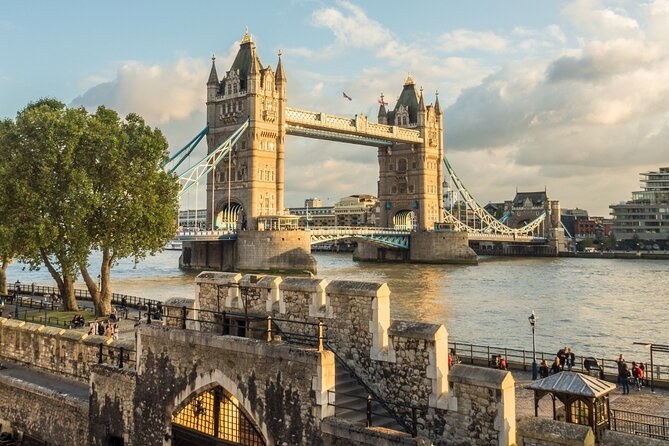
From $691 per group (up to 4)
Check Availability